
 Lost/Found
 How It Works
 Join/Login

Can cats smell their way home? Let's know the real answer
Can cats smell their way home? Let's know the real answer

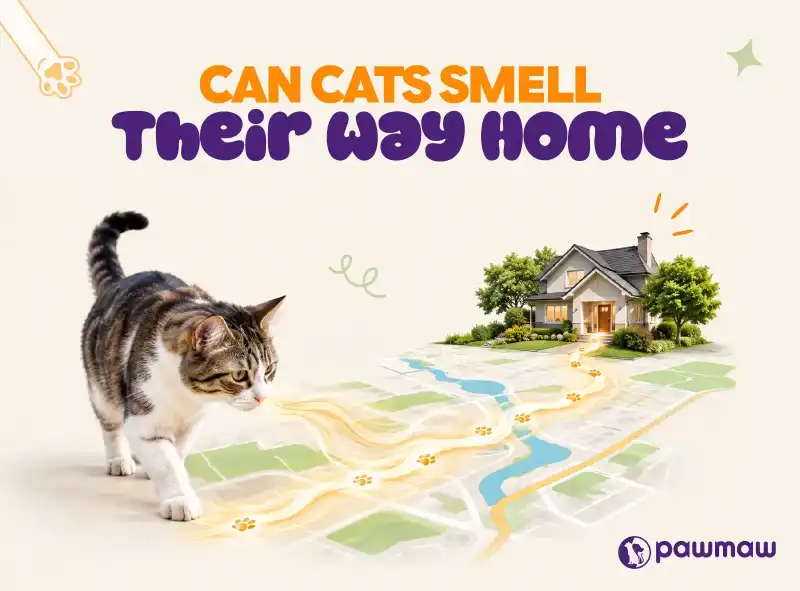
No doubt, a cat has a strong sensing organ. And with this organ, it can easily sense the familiar smell surrounding it. So the direct answer to the question of whether cats can smell their way home depends on different scenarios.
Before we know the scenario type and details, remember one thing. In most cases, cats cannot reliably smell their way home from an unfamiliar or different location. This smelling ability of cats more or less depends on the cat’s memory, familiar landmarks, and territorial knowledge. Also, their mental states in the area from which they need to smell their way home.
If they are not too scared, nor too disoriented, they may start navigation towards home. Still, their familiar route also can lose the familiar scent after a heavy storm, snowfall, high temperature, or any other disaster.
However, before we dive into the details, let's give you one of the most effective keys to getting your cat back soon. When your cat goes missing, do not rely solely on cats' sensing abilities. Rather, start taking action as early as possible, and of course, make a missing cat report soon to the lost pet rescue group near you.
Let's see the remaining-
Can Cats Smell Their Way Home?
Yes, cats can smell their way home, but this sense usually cannot bring them back! Well, let me explain why. Cats can sense the familiar smell, and it works only for short distances. Suppose your cat has lost its way and traveled far from home; in that case, it will rarely be able to sense the familiar scent surrounding it, or see the visual landmarks, or even hear the familiar sound. As it has already traveled far, first of all, the range of the familiar route is already gone. So it is nearly impossible for your cat to catch the familiar route and return.
Furthermore, whether it has traveled far or not, if the cat becomes panicked, even from a few yards, it cannot pick the familiar route. Even if it does not travel far, the smell alone does not guarantee it will come back home. Even the familiar route can be unfamiliar because of its stress level, unfamiliar surroundings, distance, and obstacles. All these can disrupt your cat’s ability to navigate the familiar route towards home.

How Do Cats Find Their Way Home?
Well, cats can use several sensory and cognitive cues to orient themselves. But we see various research results, all of which do not show that domestic cats rely on one single system to navigate home.
Here we have some research reports on cats’ spatial cognition, sound localization, and scent discrimination. All these support the use of multiple cues from the cat's end: spatial encoding in domestic cats, sound localization in cats. Also, for a better understanding of cats' sensitivity, you can read about cats’ ability to discriminate between individual and changing scents. All these studies show clearly how each cat uses different senses to understand the surrounding environment. Smell, sound, and spatial memory-these three things will play a role for cats to smell their way home.
However, we can't say clearly that cats can find their way home. So whether a cat's navigation system works well or not, they use multiple ways to navigate their familiar route towards home. Let's describe details-
Familiar Scents
A familiar scent is the first thing any pet uses to return once they go missing. Cats can use territorial communication and can go for individual recognition sometimes. As cats have a highly developed olfactory system, they can use chemical cues to navigate the familiar route. According to several experts' opinions, cats can even distinguish between familiar scents and unfamiliar scents. And they can do this better than other cats.
I mean, they can distinguish between their familiar cat and an unfamiliar cat. And their olfactory recognition changes in individual odor profiles. Not only can they sense a familiar cat, but also familiar humans, other pets, and home surrounding things- all also come within the range of a cat’s smelling capacity. That's why, when a cat is lost near home, the familiar scent surrounding it helps it scent the familiarity, thus providing useful orientation information.
Mental Mapping and Memory
A 2021 study also found that ‘’cats mentally represented the location of their owner based on the owner's voice. Cats showed greater surprise when a familiar voice appeared from an unexpected location, providing evidence of socio-spatial mapping.’
Surprisingly, cats can decode spatial relationships and remember whether an object or location remains within their visible range. When a cat stays in a home, or goes for an outing, it can remember where things are kept. I mean, where things are.
Suppose in the home, it can feel where the dining table is situated, how far the table is located from the wall, etc. Also, a cat can understand how each thing is related to the others. Like the length of the wall and the chair/table, or other things like that.
So cats use this ability to find objects. This way, when they get lost near the home, they remember how the home is located, how far the visual landscape is situated, and thus calculate the distance and placement of the home.
Sounds and Environmental Cues
Cats can use acoustic information; thus can localise nearby sounds. Cats can focus on the sound sources and can get cues on which direction they should go. At an advanced level, cats can use auditory cues to reach the sound sources, rather than only relying on their previously learned sound. I mean they do not rely only on that sound in their memory. But they can sense the source of the sound. Thus, when they feel this sound source is familiar, they can orient themselves better and can move towards the source effectively.
Magnetic Compass Theory
Magnetic compass theory is not an established theory; still, it works as the own made compass theory, especially for indoor cats. It's a homing technology cats use to reach one room to another, or one portion of the home to another portion. You may know that several living organisms in the animal kingdom, like birds, sea turtles, fish, and insects, can use Earth’s magnetic field as a magnetic compass to recognise the direction of places.
We do not have any strong evidence cat can use that or do that; still, I assume cats can do something a bit like that. So it's a bit of an assumption only; let me tell you how this mechanism works- animals who can use the Earth's magnetic field theory basically have some specialized memory cells, which may detect Earth’s magnetic field and thus can use it to get the targeted direction information (like a compass gives).
That's why expert suggestions are to focus on other cues, such as cat usage to return. While the magnetic compass idea is not that much authentic or supported, scent, spatial memory, sounds, and familiar environmental information have strong research data on how cats orient themselves and how they try to smell their way home.
Can Cats Find Their Way Back to a New Home?
A cat may find its way back to a new home, but you cannot expect this always. It's not that reliable or trustworthy. As various factors are related to cats' navigation ability for familiar scent routes, you can't reliably say that your cat can find the way back to your new home.
Look, when a cat moves to a new place, it does not build the previous well-known territory it still had at its older home. Every pet cat loves the family territory too much; therefore, a sudden change in that territory may trigger its avoidance and hiding behaviour temporarily. (pmc.ncbi.nlm.nih.gov)
So the ultimate meaning is that, after a new move, the cat can escape, and when you search for your cat, you may find your cat is confused, fearful, and may hide in a nearby safe place. That's why we suggest always keeping the cat for at least 2 or 3 weeks (or until it gets used to it) after a move to a new home. During this period, your cat can gradually learn the new smells, sounds, rooms, and surroundings. Once it becomes familiar with the new place, the risk of getting lost or getting disoriented outside the home will be lower.
If your cat gets lost after moving house, start searching immediately around the new property. Check under cars, porches, sheds, bushes, garages, and other nearby hiding places before expanding the search farther away. A frightened cat may be hidden nearby you, still may not respond to you as it is scared of your new home, and thus scared of you too!
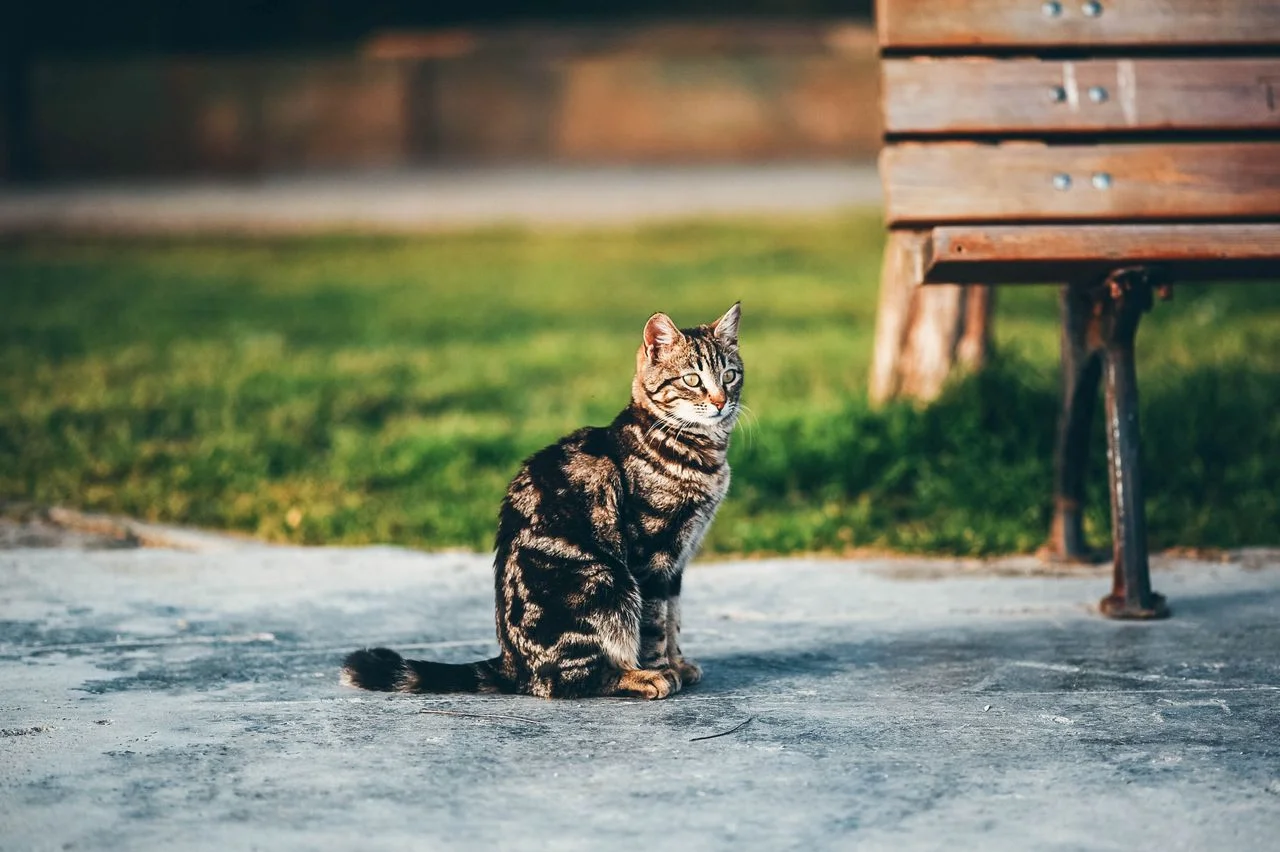
How to Attract a Lost Cat Back Home?
During the first 24 hours after losing your cat, search nearby hiding places and use familiar smells and sounds to encourage your cat to come out. Place familiar bedding, a blanket, or a small amount of favorite food near your home while keeping the area calm and quiet.
But provide the food in wet form; also, you can place other strong-scent-releasing things nearby your home. So when your cat can smell those familiar scents, it can come out of the hiding place slowly. But here you have to check that food or leftovers, because other animals also can eat the food, and your pet may not get the familiar scent you want to provide.
Another important matter: start searching all possible areas when your cat went missing. Do not assume that your cat traveled far. A frightened cat never can go too far.
A study of 1,210 missing cats found that 75% were located within 500 meters of where they escaped, and searching nearby areas thoroughly can improve your chances of finding a lost cat, especially because many missing cats are found relatively close to where they escaped. (PubMed Central)
So search the possible hiding spots like under the car, bushes, backyard, sheds, garages, decks, on rooftops, or other enclosed areas. And better you cover surrounding all those places with your cat’s familiar things (with a strong scent, of course). And until your cat does not come out, gently call its name.
When your cat gets the familiar scent with a familiar sound, its fear will automatically lessen, and it will try to come out. Sometimes your cat's dearest toy can also work. But as it does not release too much scent, we prefer cat's food, used litter, blanket, bedding, or other clothing to attract it immediately.
The ASPCA also recommends asking for neighbours' help. Your cat also may hide at neighbours territory as well. That's why ask your neighbours to search all possible hiding spots, and once they get back your cat, ask them not to scold or chase. Rather, tell them to be polite and to inform you immediately.
Do the following deeds to attract your lost cat:
- Put familiar-smelling bedding or clothing near the home.
- Offer a small amount of strongly scented favorite food.
- Search nearby hiding places quietly.
- Call your cat gently using a familiar voice.
- Keep a safe, familiar entrance accessible.
- Avoid chasing or making loud noises.
Conclusion
Cats can use familiar scent, visual landmarks, environmental cues, and familiar sound to navigate their way home, but these never assure you that your cat will return on its own. Though your cat may be waiting eagerly to come home, it may still not find the way because of its panicked state, because it traveled so far to an unknown or unfamiliar location. Sometimes your cat may get lost near the home, but it may still not come home because the familiar route has already lost its scent due to wind, dust, temperature, snowfall, or other natural disasters.
So the answer is yes, sometimes cats can smell their way home if they get lost near their known place(home), and if they are not panicked, and if the familiar route still didn't lose the familiar scent.
Keep searching and following up on sightings instead of assuming your cat will not return, especially if you are unsure when to stop looking for a lost cat.

Categories
- All Post

- Lost & Found Pet Tips
- Pet Behavior
- Pet Training
- Pet Food
- Pet Health
- Pet Care
- Pet Safety
- Others

 Pawmaw


Get Your Pet Back Home
Over 10 million dogs and cats are lost or stolen every year. You can report your missing pets with PawMaw.



 Pawmaw
How to Check If a Found Cat Has an Owner
Learn how to check for an owner using ID tags, microchips, local shelters, and online resources. Follow simple steps to help reunite a lost cat with i...
 Pawmaw
How to Check If a Found Dog Has an Owner
Learn how to check for an owner using ID tags, microchips, local shelters, and online resources. Follow simple steps to help reunite a lost dog with i...
 Pawmaw
How to Search Shelters for a Lost Pet!
Contact nearby animal shelters, share your pet’s photo and details, check intake records, and visit regularly. Expand your search to neighboring shelt...
Share:


Leave a Reply
Get Your Pet Back Home
Over 10 million dogs and cats are lost or stolen every year. You can report your missing pets with PawMaw. We can notify thousands nearby within a minute.


PawMaw is actively helping to search for your lost pets in your local area. Report your lost/found pets here and send a free alert instantly.