
 Lost/Found
 How It Works
 Join/Login

Dog Jumped Fence and Ran Away: What to Do Now?
Dog Jumped Fence and Ran Away: What to Do Now?


Why did your dog jump the fence and run away? Well, several reasons may come into play. Like, it may be due to going after another pet, being scared by loud noise or something else, becoming bored, or looking for another dog. Or simply it has an intention to run away from you.
So how can you say your dog jumped the fence and ran away? If your dog does not return for a long time and someone saw it jump the fence, that means your dog ran away! When you understand your dog has run away, do not wait too long for its return; do not be emotional, thinking about why your dog left you in such a way!
Start searching for your dog immediately, check all possible routes and nearby places, and ask your neighbours about any sightings. Report your lost dog to alert people nearby. As your dog runs away intentionally, the quicker you take action to find it, the better your chance of getting it back.
However, let's read the details now-
Why Dogs Jump Fences and Run Away
Dogs never jump fences and run away without any reason. Some people might think dogs do it as part of their outdoor fun or play, but that's not always true. Common reasons why dogs do that: chasing, anxiety, boredom, fear, social attraction, and curiosity. Sometimes as part of their advanced-level outdoor fun as well!
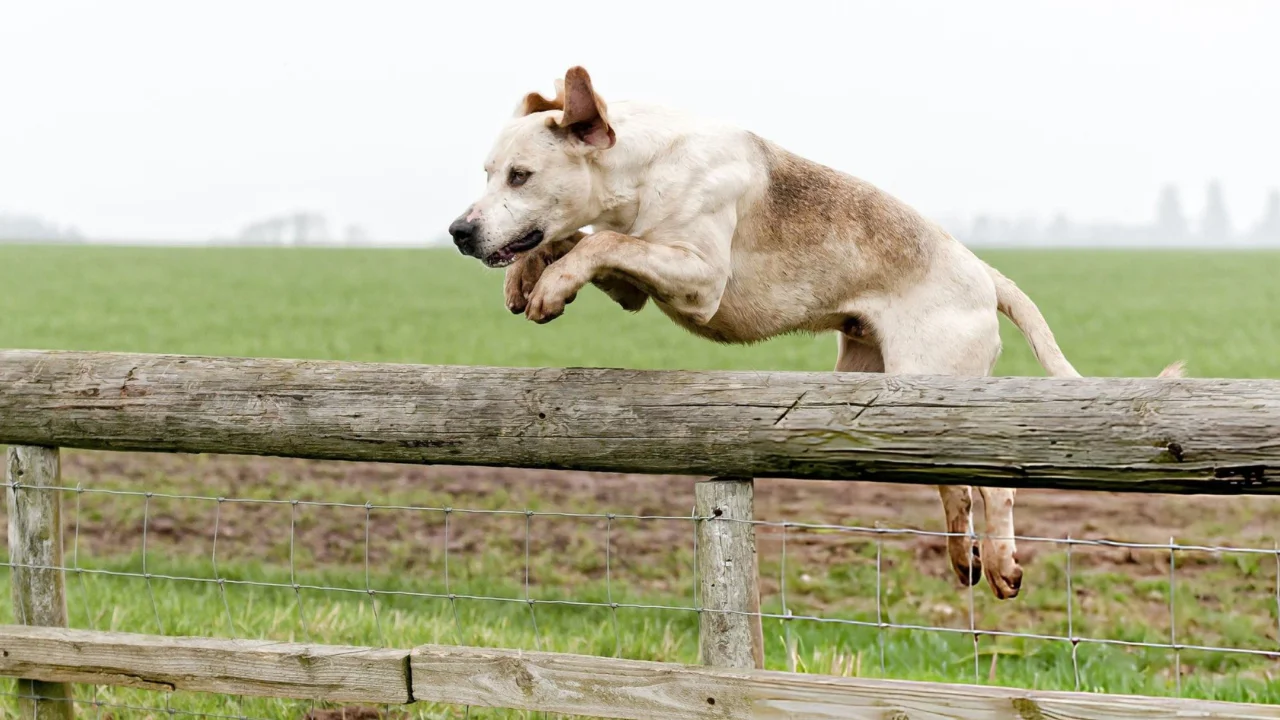
However, before we dive for details- lets see what research says about dogs jumping through the fence and running away along with it! In a study of 1,053 dogs, 23.3% of dogs kept behind see-through or privacy fences had reportedly escaped, showing that even physical fences do not always prevent a determined dog from getting out. (PubMed) So the percentage is a little bit alarming! Now let's see the reason behind this escape!
Chasing Something They See
This is the first reason why dogs jump fences and run away. When your dog sees a squirrel, bird, other dog, pet, cyclist, a vehicle, or simply a passerby crossing the place beside the fence, it may trigger your dog's prey/chasing drive. Even if it is not safe outside the fence, your dog may feel too inspired to jump the fence and catch or chase the targeted objects. Dogs have a common instinct to chase moving objects or animals like cars, dogs, cats, squirrels, birds, etc.
Separation Anxiety or Stress
It's usually more common in dogs whose owners stay out for too long! And their dog feels too lonely at home. When the dog feels too bored or too lonely, they focus on outdoor adventures like jumping, escaping, exploring the road, car, new area, etc.
Again, some dogs often jump over the fence and escape because they try to become so distressed rather than the owner misjudging and disobeying! We saw several research studies that prove this fact. Research has found associations between separation anxiety and behaviors such as destructive activity, vocalization, and other stress responses. (PubMed).
So if your dog does this most often, look for anxiety symptoms in your dog. Though these symptoms may vary by individual, some common ones are barking, pacing, destruction, or attempts to break through doors or fences. When your dog repeatedly tries to jump the fence and runs away, focus on these underlying reasons and behavioural changes in your dog. Do not only focus on the height of the fence; also focus on making your dog healthy (mentally and physically). So that they do not intend to jump over the fence with an escape plan!
Boredom and Lack of Exercise
As we said, a lonely dog or a dog that feels bored and exhausted at home tries to escape over the fence. However, many dog owners ask a common question: why, after giving so many facilities, does their dog try to run away over the fence? Well, it's not an issue of getting facilities only.
Look, dogs also have good or bad feelings. When you do not provide them with plenty of activities or fun time, their idle brain tries to push them to explore the outer world. When a dog does not get anything to do at home, it may find the outer world offering a new smell, a new animal, a new world, and new fun. To stop such activities, you can follow Dogs Trust's recommendations.
Dogs Trust recommends regular walks, play, training, scent games, food puzzles, and other enrichment to meet a dog's physical and mental needs. So the gist is, before you let your dogs stay alone in the yard, or near the fence, offer age-appropriate body exercise plus mental stimulation.
Fear From Fireworks, Storms, or Loud Noises
Fireworks, thunderstorms, construction noise, and other sudden sounds can frighten dogs enough to trigger an escape attempt. A panicked dog may jump a fence, bolt through an open gate, hide, tremble, pace, or ignore familiar commands.
Dogs can also go missing during fireworks when repeated bangs and flashes make them run without paying attention to where they are going. Puppies, newly adopted dogs, and dogs that are already anxious may react more strongly to sudden noise or unfamiliar surroundings. Keeping them indoors during predictable loud events and securing doors, gates, and windows can reduce the risk of escape.
So don't neglect it when you see fireworks, thunderstorms, or other loud noises; see the survey report on how these sudden changes can cause your dog to run away and get injured. A 2024 survey found that 45.3% of dogs showing a response to fireworks had escaped or attempted to escape. (Wiley Online Library). So what can you do when your dog has to face these disasters? Well, keep your dog safe in an indoor place. Make sure you have closed all windows and doors. Also, you can play some soft music or white noise so that your dog does not get the chance to focus on outdoor noise.
Trying to Reach Another Dog or Animal
Some dogs are too explorer-minded. When these dogs see another dog or a new animal walking outside the fence, they cannot stop themselves from getting to these outside dogs or animals. Social attraction and interaction smells can lead your dog to get the smell of a mate, wildlife, or an animal.
If your dog also prompts to do this, better you try to reduce access to scent & visuality may come from the outside. Also, carefully observe your dog; try to keep it busy until it comes under control with outdoor adventurous activities.
Curiosity About the Neighborhood
In a new place, or when new neighbours come, some dogs may try to see what the neighbours are doing. Also, dogs naturally try to investigate new sounds, smells, people, animals, and movement. When your dog also sees an interesting or new activity happening at the neighbour's home, it tries to jump the fence and see directly from the outset.
In that case, it is better to give your dog a regular walk outside, so that it sees everything every day near the home. New things may perhaps capture your dog's attention suddenly, but when it sees surrounding things daily, it will rarely feel attracted to them. Also, check whether there is any loose portion in the fence or not; strengthen the weak points in the fence. Never assume a familiar dog will stay home simply because it has never escaped before.
What to Do When a Dog Jumped the Fence and Ran Away
After you have taken so many precautions, if your dog jumped the fence and ran away, start searching as early as possible. Early searching enhances search efficiency a lot. ASPCA survey report says that 49% of recovered lost dogs were found by searching the neighborhood, and 93% of lost dogs in the survey were eventually recovered.
Let's see what you can do when your dog jumps the fence and goes missing.
Search Near Your Home First
To find a lost dog, start searching as close to home as possible. Check your yard, nearby streets, alleys, garages, sheds, porches, parks, and other places where your dog could hide or become trapped. Ask nearby neighbours if they have seen your dog and check security camera footage, when available, for clues about the direction it traveled.
Unlike a cat, a dog can't hide in a tiny spot, so better to search outside well. Check your yard, nearby streets, alleys, parks, porches, garages, sheds, plus all possible hiding spots for your dog. Ask your neighbours whether they saw your dog or not. Check their CCTV footage, and search their property with their permission.
Don't Run Toward Your Dog
If you find your dog, do not scold it or run towards it. Better be gentle, and keep patience for a few minutes. Just be sure your dog has seen you. Once your dog sees you, it will obviously come to you. At this time, if you start to scold your dog, or loudly call it, or even run towards it quickly, your dog will become confused and scared.
Ultimately, it will again take an attempt to run far. A frightened dog may react negatively if you run towards it suddenly; instead, be calm, talk in a friendly tone, and let your dog approach you. Keep in mind one thing: a frightened dog may behave differently in an unknown, lost place than they do in the home.
Use Scent Items, a Familiar and Friendly Voice
Familiar scents may help your dog recognize an area and feel safer. Since dogs respond strongly to familiar smells they love, you can place their used blanket, bed, favorite toy, or a piece of your unwashed clothing near your home. If you spot your dog, avoid shouting or rushing toward it. Use a calm, familiar voice and give it time to approach you.
Use Security Cameras to Track Your Dog
Both your security camera and your neighbour's one, both are important to track your dog's last escaping location from your territory. Also cover your nearby businesses' footage. Carefully check the footage to get the direction your dog took, the time it passed, and any streets or people it followed.
Even if you can check one camera’s footage, it may help you to narrow the search area and focus on other possible spots. And when you get any clues about your dog's route from one piece of footage, follow that route and try to cover other footage on that route.
ASPCA recommends combining neighborhood searches with community and online outreach when a pet goes missing.
How to Prevent Your Dog From Jumping the Fence Again?
Let's know how you can prevent your dog from jumping the fence again in the future. Do these things: try to know the reason why your dog tries to jump, secure the fence, provide enough exercise and mental stimulation plus provide your dog enough outdoor time. Why your dog jumped, securing the fence, providing enough exercise and mental stimulation, and supervising outdoor time.
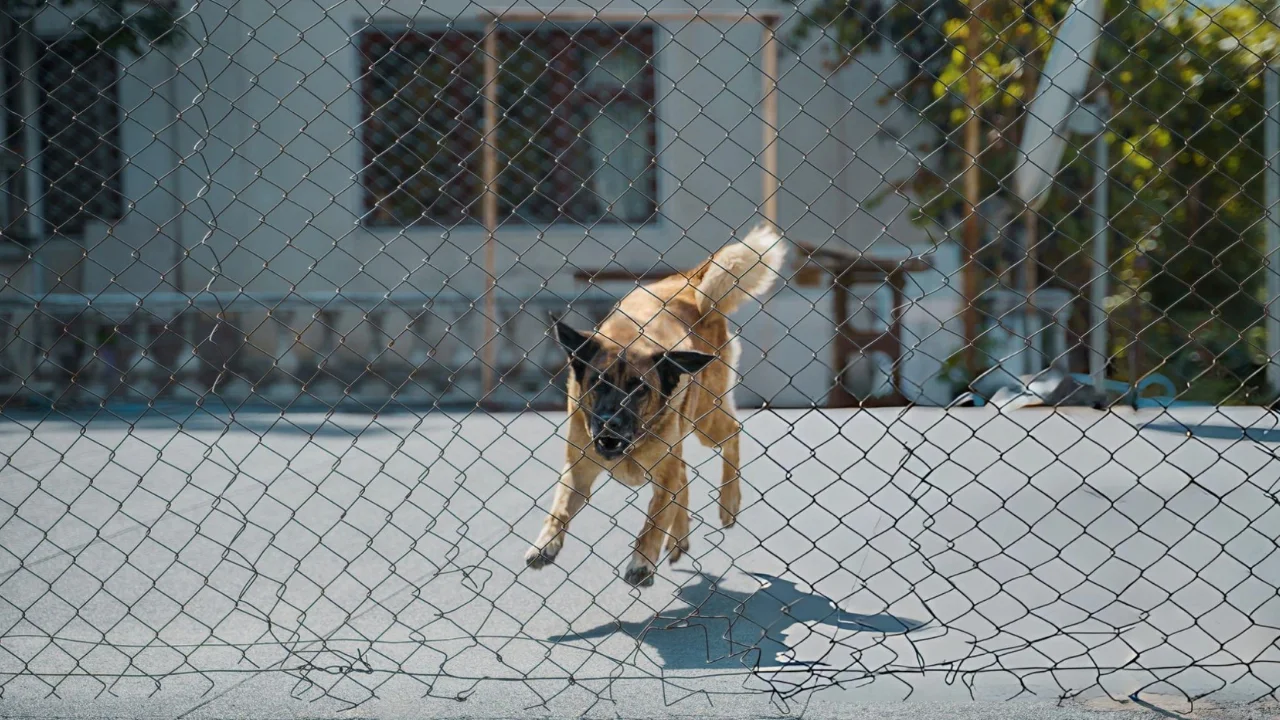
Identify Why Your Dog Escaped
First, identify why your dog tries to escape from you. I mean, just identify the trigger first. Your dog may try to do this to chase another animal, to focus on a passing new animal, to hear the car noise, or to just because of its boredom. So when you can identify the reason, you can take action to minimise this.
Increase Fence Height or Add a Secure Extension
Increase the fence height or add a secure extension (might be an inward-angled extension ). Make it harder for your dog to jump over the fence. Regularly check for gaps or damaged sections. Remove any adjacent things from your fence. If there is any adjacent tree, give a high surrounding fence around that tree too.
Increase Exercise and Mental Stimulation
In most cases, your dog tries to jump over the fence due to boredom or lonely feelings; I mean, when your dog does not get anything to get busy, it focuses on the outdoor world. So every day, keep your dog busy with appropriate physical and mental activities.
Daily walks, play, training, scent games, and food puzzles not only keep your dog busy, but also reduce the chance of idle thinking to run away. All those activities are the safest way to utilize their energy, so that they do not get biased to jump over the fence or run away.
Improve Recall Training
Take your dog to outdoor training frequently. Cover both sides of the fence for outdoor activities. Offer a few recall training sessions here. If the fence is too short, you can train your dog like Jump, come, stop, sit, don't go, etc. Use treats and toys to train your dog on your command. AKC, American Kanal Club, says Practise first in low-distraction areas and gradually increase distance and distractions.
Supervise Outdoor Time
Until your dog has controlled behaviour, do not let it play alone in your backyard. Even nobody should leave an escape-prone dog alone in any outdoor areas. When your dog plays in the yard, sit aside and observe how it is playing. If it tries to jump over the fence, command it to stop and come. When it obeys your command, give a treat as a thank-you bonus. If you try this every day ( for the first 2 or 3 weeks), gradually your dog will come under total control and will not try to escape through the fence.
Conclusion
Your dog may try to jump over the fence and run away again and again until you address the reason behind this and solve the problem 100%. So instead of taking action after your dog goes missing, it is better to reduce the chances of your dog going missing.
Better provide your dog with enough physical and mental exercise, secure the fence, do recall training, and supervise your dog's outdoor time. Also, give your dog a certain outdoor walk with you. Because unknown or unfamiliar things make the dog curious, when you regularly go outside with your dog, the outside things will no longer be unknown to your dog.

Categories
- All Post

- Lost & Found Pet Tips
- Pet Behavior
- Pet Training
- Pet Food
- Pet Health
- Pet Care
- Pet Safety
- Others

 Pawmaw




Get Your Pet Back Home
Over 10 million dogs and cats are lost or stolen every year. You can report your missing pets with PawMaw.




 Pawmaw
Why Does My Cat Stare at Me? All the Possible Reasons!
Cats stare at their owner to ask for something like food, playtime, or attention, or to watch what their owners are doing.
 Pawmaw
Why Does My Cat Bite Me While Purring? Causes & Behavior Explained!
Cats may bite while purring due to overstimulation, affection, play behavior, or communication, not always aggression.
 Pawmaw
Can Cats Sense When You Are Sad? Details Discussion Here!
Yes, cats can sense when you are sad. But not in a human way. Cats can sense you are sad in their feline way.
Share:


Leave a Reply
Get Your Pet Back Home
Over 10 million dogs and cats are lost or stolen every year. You can report your missing pets with PawMaw. We can notify thousands nearby within a minute.


PawMaw is actively helping to search for your lost pets in your local area. Report your lost/found pets here and send a free alert instantly.