
 Lost/Found
 How It Works
 Join/Login

Lost Dog During Fireworks: What to Do and How to Find Them
Lost Dog During Fireworks: What to Do and How to Find Them

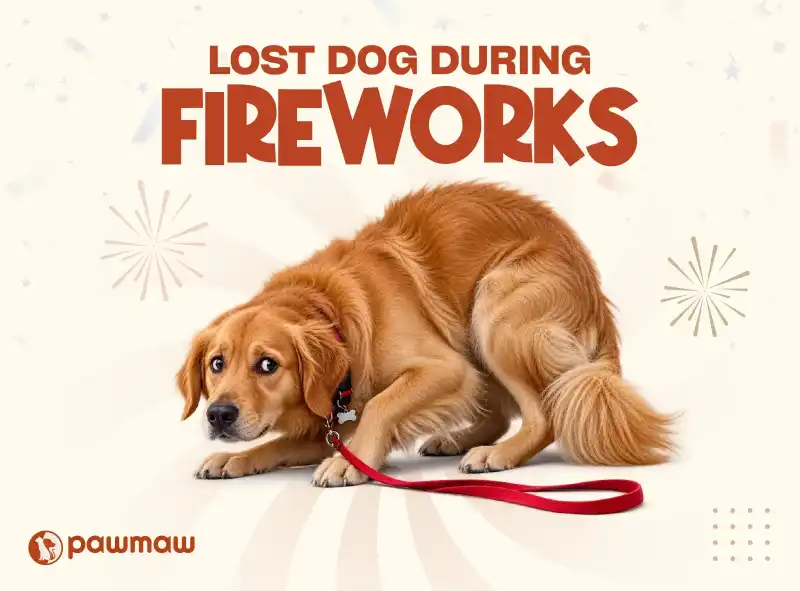
If suddenly your dog gets lost due to fireworks, take action immediately. As fireworks create loud explosions, bright flashes, and sudden noises, all of these could easily trigger your dog's fear response, which might become a serious issue later.
To stop your dog from panicking and running away, start searching the nearby hiding places of your home. Alert your neighbors, contact local shelters, and share a lost-dog alert.
However, to find your lost pet, you can also seek professional assistance. Nowadays, various experts provide missing pet rescue services professionally, so even if you are tired of trying to get your dog back and there is still no news, I suggest you seek professional assistance. So before you take professional service, let's see how you can find your lost dog during fireworks.
Why Do Dogs Run Away During Fireworks?
Dogs run away during fireworks because the loud noise and huge lights may trigger their fear and stress. They can't take the sudden, huge lighting normally. Plus, sudden loud noise makes them confused, scared, and, of course, puts them in a lot of discomfort.
In the worst case, this situation even forces them to panic and to find a safe place nearby.
Look, fireworks create such a huge sound and lighting sparks; both are very far from the dog's tolerance range, so dogs try to escape from this unwanted situation and try to make themselves safe anyhow.
All reasons in gist:
Loud noise: Not only fireworks, but even thunder also creates huge noise, which easily startles dogs with their explosions and sudden bangs. Some dogs even have anxiety about loud sounds or bright flashes; for them, the situation becomes worse, and they try to escape as early as possible.
Bright flashes: The bright flashes come from the fireworks; they may give you pleasure, but for the dogs, they create fear and anxiety.
Strong vibration: Strong vibration, in a sense, suddenly, huge lights and noise give your dog a strong vibration feeling. It's a very uncomfortable and unsafe feeling for the dog, so your dog tries to find a safe place soon.
Fear and anxiety: Dogs may become extremely anxious when they cannot predict when the next sound will occur.
Previous bad experience: If your dog had a bad experience with fireworks, it may react more when it sees another firework. Previous scared feelings may trigger double fear. So when your dog sees the fireworks, it may try to escape.
Unavailability of a familiar person: What happens when an unwanted situation happens in front of your pet? It tries to get shelter from you. When fireworks happen, the dog becomes scared and tries to run through various escape routes without recognising any familiar person near him/her.
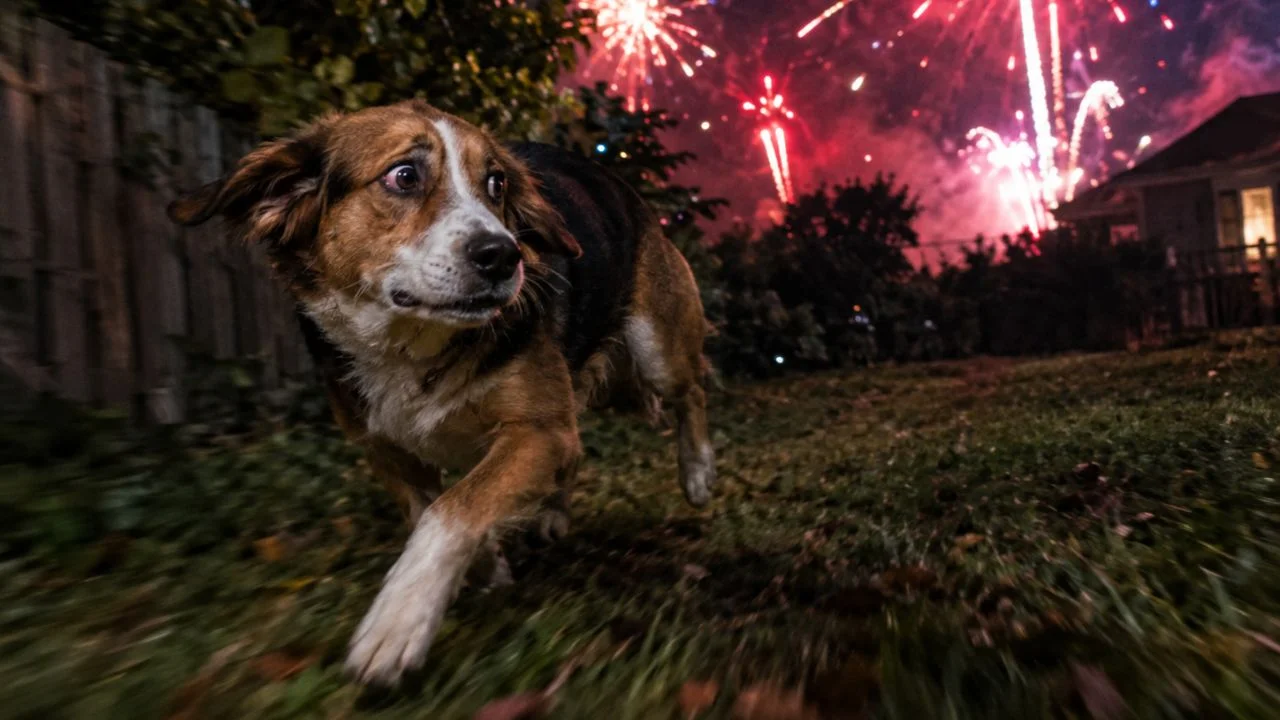
How to Find a Lost Dog During Fireworks
Well, before you know how to find a lost dog, let me tell you one important thing you are supposed to know. Though you will get the details from the link, let me share it here. The first important and foremost step you can take to find your dog is to handle yourself calmly and more technically. Most often, it happens that when owners lose their dogs become so panicked that they can't take the right step to find their missing dog.
However, stop being panicked and be calm. Think with a cool head about when and where your dog got lost. Think about your dog’s behavioural nature. Like how far it can go, and how long it can survive in a new area. Recall whether your dog has had such an experience or not. If it was such an escape experience, from where did you bring it back?
However, note all the things; start searching from your home. Do not miss your neighbour's home as well. Use tracking technology, and report your dog missing. Keep in mind one thing: a scared dog may escape farther and more quickly than usual, so the earlier you take action to return it, the chances increase accordingly. Details are given below-
Stay Calm and Avoid Panic
Do not panic. Rather, be calm and organise the action procedure to find your dog. For example, make a list of where you can start searching for your dog. After that, bring your dog's leash, treats, favourite foods, or toys during the searching time. Call your pet softly, and wait a while to hear any tiny movement or distant sound. Do not shout or speak loudly in front of your dog, as it is already scared from earlier; your shouting or scolding may worsen the situation.
Search Nearby Immediately
After you have handled yourself, you now have to search for your dog as fast as you can. Start from your home. Both the inside and outside areas are equally important. See the possible hiding places your dog can hide. Once you have finished searching your home, start the immediate areas. Search under porches, vehicles, bushes, sheds, garages, fences, and other quiet hiding places. Use a flashlight to search the dark areas. If you still did not find your dog, expand your search time and area.
Notify Your Neighbors Right Away
Your neighbour's home is the next possible area where your dog may hide. So once you have completed searching all possible hiding places in your home and nearby, next you need to notify your neighbours about your dog's disappearance. Their home inside might not be the possible place your dog may hide, so ask them to search their yards, garages, sheds, and other enclosed areas.
Better yet, see their CCTV footage to be sure whether your dog hides inside their areas or not.
However, tell them not to chase your dog if they find it. Instead, tell your neighbours to contact you when they see your dog.
Use Technology to Track Your Dog
Look, prevention is better than precaution. I mean, you can take a few preventive actions before your dog goes missing, so that if it goes missing anyhow, you can find it. There are several technologies you can use to find your lost dog. So let me give you a few examples: a GPS tracker or another tracking device could be a part of your preventive actions.
If your dog wears a GPS tracker, it means you can track it anywhere, anytime. Also, a microchip is another technical part you can place into your dog’s body! When your dog wears a microchip, people can scan this chip and find your contact information. Thus, when your dog goes missing anyhow, if anybody finds it, they can contact you.
So a simple footnote here is supposed to be: You can also use security cameras, doorbell cameras, and local lost-pet groups to look for sightings!
Report Your Dog Missing
Immediately report your dog missing to local animal shelters, animal control agencies, veterinary clinics, and nearby rescue organizations. Also share details about your dog’s body identity. I mean the dog's breed, unique body marks, fur type and colour, eye colour, last known location, etc.
Also, do not forget to provide a clear photo of your dog. Share your current contact info, so when anybody gets any sightings of your dog, they can immediately notify you.
How to Prevent Fireworks Escapes in the Future
Let me give you a childish idea! First, train your dogs to be habituated to the loud sounds and noise! Though it's nearly impossible, as dogs can't tolerate huge sounds or sudden lighting, so better you find another way to prevent your dog from escaping at the time of fireworks near your area.
Well, many of our readers often ask how to prevent their dogs from escaping during fireworks in the future. Though it depends from dog to dog and owner to owner, we can still give you some basic workflow by which you can control the escaping in the future. Let's see the details here-
Create a Safe Indoor Space
At first,t make a safe indoor place for your dog so that when it becomes scared of the fireworks can easily hide there. Close the windows and doors. Draw the curtains well. Turn on the T.V., and run the fan. Sometimes you can use white noise to cover the loud noise of the fireworks. Try to give company to your dog at that time. Keep your dog away from the door, gate, windows, or other escaping portion of your home.
Here is the expert recommendation about creating a safe indoor place for the pets.
The ASPCA recommends moving pets to a quiet interior room away from windows and using soft music or other background sound when pets are afraid of loud noises. - ASPCA
Exercise Your Dog Before Fireworks Begin
Exercising your dog before any unwanted situation is one of the greatest ideas to reduce the possibility of an upcoming problem. Go for a walk with your dog, or give your dog a few physical activities. When your dog does some physical activity, it releases excess energy and settles down before the loud noises begin.
And of course, try to reach home after the fireworks have finished. If you can't do this, at least ensure you are staying in a safe indoor space with your dog.
Microchip Your Dog
Let's start with the expert recommendation about microchipping dogs. The ASPCA says that,
Keeping both the microchip registration and ID-tag information current is important because accurate identification can help reunite a lost pet with its owner - ASPCA (2)
Actually, it's a bit like taking care of your dog when it has already escaped from your territory! I mean, though you have taken all precautions, your dog still has a chance to escape; that's why you need to take some actions so that when it goes missing, you can find it.
You can add a GPS tracker to your dog’s body. Or you can add a microchip. Make sure the registration information is current and updated in the microchip. Only a properly registered microchip can allow a shelter or veterinarian to identify you as your missing dog’s owner. Also, your dog should wear a collar with a current identification tag.
Use Anxiety-Reducing Techniques
First, learn to recognise common dog anxiety symptoms. If you can realise your dog is exhibiting those symptoms, let's take some initiatives to reduce them. Use calming techniques that your dog responds to. Like, you can play with your dog and can give it quality pet time. Some dogs calm down with their favorite treats or toys.
Again, some may love to walk outside or do other physical activities. Playing background noises is another calming technique for some dogs. Listen carefully; you must have to watch for signs of fear and anxiety so you can respond before your dog tries to escape.
Even in the worst case, you may have to consult with your vet about your pet. So don't neglect the signs, nor even scold your dog when it exhibits such signs.
Prepare an Emergency Plan
Keep a recent photo of your dog and write all other body-identifying information of your dog behind the photo. It's a type of after-care work. If your dog went missing due to fireworks, you can quickly and easily share the photo with your neighbors, shelters, veterinarians, and lost-pet services instead of wasting time gathering information. So it can help you not waste your time to gather/generate information.
Conclusion
Actually, preventing your dog from escaping fireworks starts with good and safe preparation. And the more preparation (I mean the better) you can take before the fireworks, the less chance of your dog escaping.
At the time of fireworks, keep your dog indoors, secure all the escape routes, exercise your dog beforehand, use calming techniques, and keep your dog’s ID card and microchip information updated. If your dog escaped after taking all these actions, start searching immediately, notify your neighbours, and take all other action quickly.
References
- American Society for the Prevention of Cruelty to Animals. (n.d.). Fourth of July safety tips. ASPCA.
- American Society for the Prevention of Cruelty to Animals. (n.d.). Microchips. ASPCA.

Categories
- All Post

- Lost & Found Pet Tips
- Pet Behavior
- Pet Training
- Pet Food
- Pet Health
- Pet Care
- Pet Safety
- Others

 Pawmaw

Get Your Pet Back Home
Over 10 million dogs and cats are lost or stolen every year. You can report your missing pets with PawMaw.



 Pawmaw
How to Check If a Found Cat Has an Owner
Learn how to check for an owner using ID tags, microchips, local shelters, and online resources. Follow simple steps to help reunite a lost cat with i...
 Pawmaw
How to Check If a Found Dog Has an Owner
Learn how to check for an owner using ID tags, microchips, local shelters, and online resources. Follow simple steps to help reunite a lost dog with i...
 Pawmaw
How to Search Shelters for a Lost Pet!
Contact nearby animal shelters, share your pet’s photo and details, check intake records, and visit regularly. Expand your search to neighboring shelt...
Share:


Leave a Reply
Get Your Pet Back Home
Over 10 million dogs and cats are lost or stolen every year. You can report your missing pets with PawMaw. We can notify thousands nearby within a minute.


PawMaw is actively helping to search for your lost pets in your local area. Report your lost/found pets here and send a free alert instantly.